La passerelle connectée : Révolutionner le stationnement intelligent avec le module 4G ZX4224
Le paysage des infrastructures urbaines subit une transformation profonde. Les systèmes de stationnement traditionnels, handicapés par des coûts d'installation élevés, une maintenance complexe du câblage et une scalabilité limitée, ne sont plus suffisants. L'industrie se tourne vers Solutions de Stationnement Intelligent, où la connectivité est la pierre angulaire.
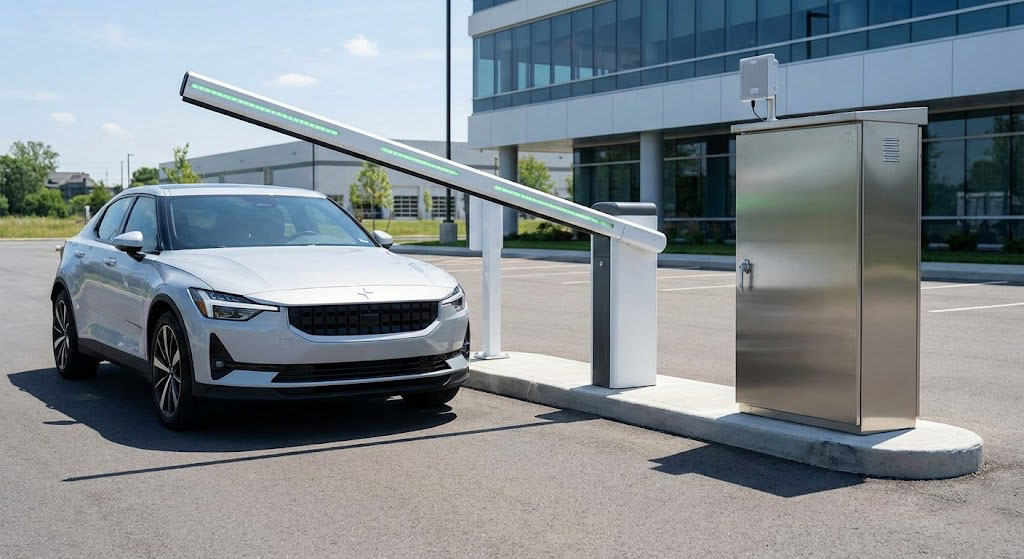
Au cœur de ce changement se trouve le ZX4224, un module 4G LTE de qualité industrielle conçu pour faire le lien entre les barrières mécaniques et les plateformes cloud intelligentes.
1. Plongée Technique : Le Module ZX4224
Le ZX4224 est spécialement conçu pour les applications M2M (Machine-to-Machine) et IoT où la fiabilité et la résilience environnementale sont primordiales. Contrairement aux clés USB grand public, ce module est conçu pour résister aux rigueurs des environnements industriels en extérieur.
Spécifications Clés
-
Technologie Réseau : Prise en charge multi-mode incluant LTE FDD/TDD, avec retour arrière vers WCDMA et GSM. Cela assure une compatibilité mondiale et une résilience réseau même dans les zones avec une qualité de signal fluctuante.
-
Débit de Données (LTE Cat 4) :
-
Téléchargement : Jusqu'à 150 Mbps
-
Téléversement : Jusqu'à 50 Mbps
-
Pertinence : Des vitesses de téléchargement élevées sont critiques pour transmettre des images ALPR (Automatic License Plate Recognition) et des extraits vidéo en temps réel sans latence.
-
-
Interfaces matérielles :
-
UART : L'interface principale pour l'envoi de commandes AT et de télémétrie à faible bande passante. USB :.
-
Facilite le transfert de données à haut débit (crucial pour les données image/vidéo), les mises à jour de firmware et l'intégration basée sur Linux. GPIO :.
-
Broches programmables pour les indicateurs de locaux (par exemple, LED réseau, statut de la barrière) ou le déclenchement de réinitialisations. Interface SIM :.
-
Prend en charge les cartes SIM standard 3FF/4FF. Tension :.
-
-
However, as we have seen, this journey is not without its challenges. Thermal dynamics, complex RF environments, and the need for sophisticated orchestration tools present hurdles that demand skilled engineering and strategic planning. The convergence of IT and OT roles is perhaps the most significant cultural shift required to support this technological one. For the network engineer, the message is clear: the router is evolving. It is no longer just about routes and subnets; it is about compute, storage, and application logic. Embracing the 5G edge router means embracing the future of a fully connected, intelligent, and autonomous industrial world.
-
Température : Wide range support (e.g., 3.3V – 4.2V).
-
Plaque opérationnelle de , assurant le fonctionnement dans des hivers extrêmes ou sous un ensoleillement direct d'été. -40°C to +85°C, 2. Architecture système : Intégration du ZX4224 dans les barrières.
-
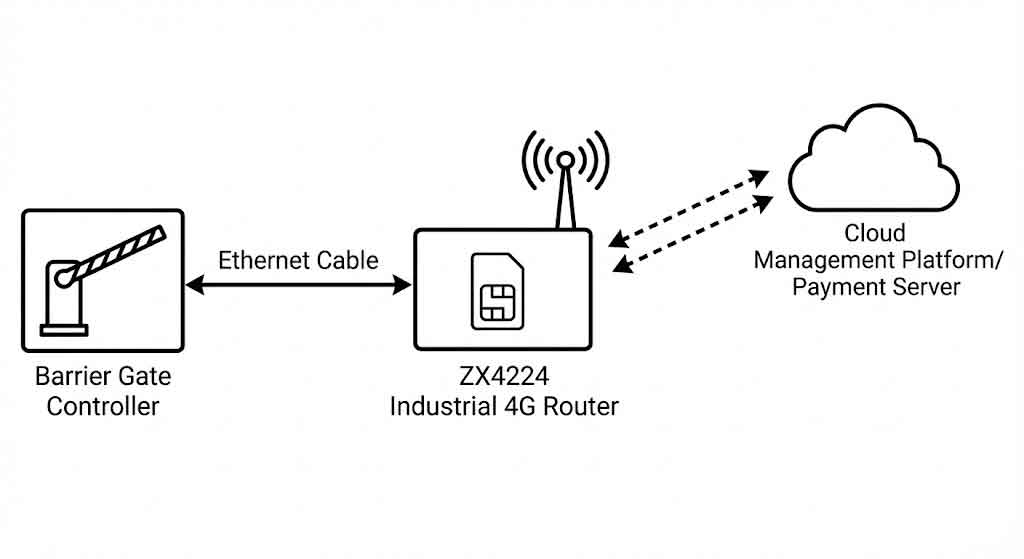
Transformer une barrière autonome en un nœud IoT connecté nécessite une conception architecturale robuste. Le ZX4224 agit comme passerelle, traduisant les données des capteurs locaux en paquets compatibles avec le cloud.
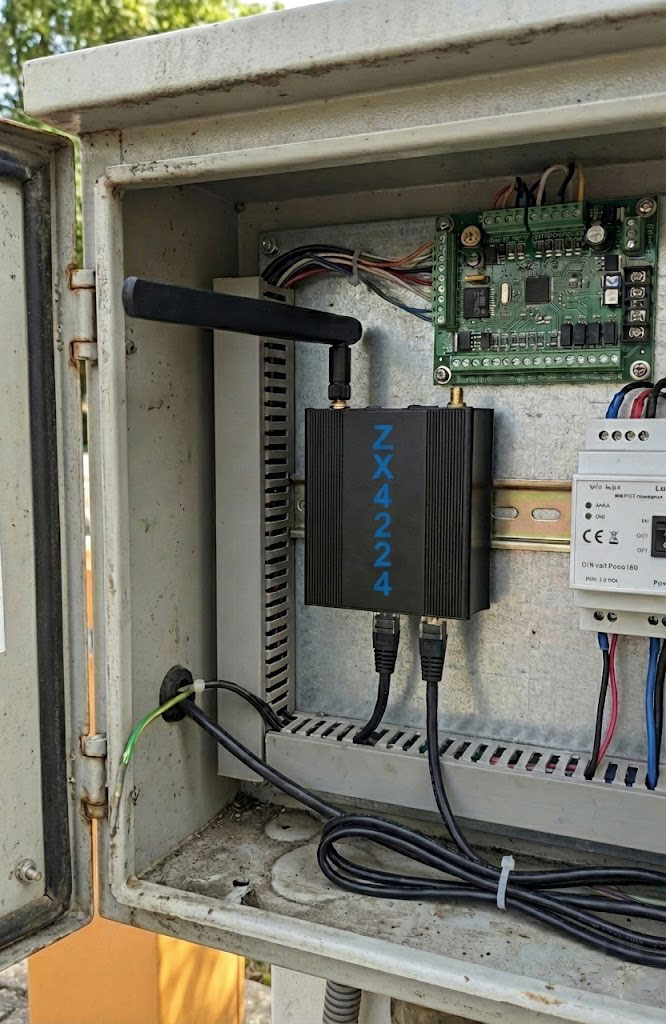
Le pipeline de flux de données.
Acquisition :
-
Le contrôleur de barrière collecte des données à partir de Détecteurs de boucle Capteurs IR, Contrôleurs d'accès, et (lecteurs RFID/QR). Traitement & Transmission :.
-
Le contrôleur communique avec le via UART ou USB. ZX4224 Connectivité :.
-
Le ZX4224 encapsule les données et les transmet via le réseau 4G LTE en utilisant des protocoles comme (pour la télémétrie) ou MQTT (pour les transactions sécurisées). HTTPS Action Cloud :.
-
Topologies de connectivité The Central Management Server processes the request and sends a command back (e.g., “Open Gate”) via the ZX4224 to the controller.
Cloud Direct :
-
La méthode la plus simple où le ZX4224 se connecte directement à Internet public en utilisant le chiffrement TLS/SSL. Tunneling VPN :.
-
Pour la sécurité d'entreprise, le ZX4224 prend en charge IPSec , créant un tunnel sécurisé vers le réseau d'entreprise. et OpenVPN, Les déploiements à grande échelle peuvent utiliser un Point d'Accès Nom (APN) privé pour isoler le trafic des appareils d'Internet entièrement.
-
Private APN: 3. Bénéfices stratégiques de la connectivité 4G.
Pourquoi choisir le ZX4224 plutôt que l'Ethernet filaire traditionnel ?
A. Efficacité des coûts et du déploiement
Zéro tranchée :
-
Le coût le plus important dans l'installation de stationnement est les travaux civils (creuser des tranchées pour les câbles). Le ZX4224 élimine cela, réduisant le temps d'installation de semaines à jours. Extensibilité Plug-and-Play :.
-
Ajouter une nouvelle barrière nécessite seulement l'alimentation et un ZX4224. Aucun commutateur réseau ou extension de fibre n'est nécessaire. B. Fiabilité inébranlable.
Redondance :
-
Les connexions filaires sont vulnérables aux dommages physiques (accidents de construction, rongeurs). La nature sans fil du ZX4224 supprime ce point de défaillance. Maintenance à distance :.
-
Les opérateurs peuvent interroger le ZX4224 pour obtenir des journaux de diagnostic à distance, réduisant le besoin de coûteux déplacements sur site. 4. Cas d'utilisation avancés enabled par le ZX4224.
La bande passante élevée et la faible latence du ZX4224 permettent des fonctionnalités avancées qui étaient auparavant impossibles avec les modules 2G/3G.
50 Mbps vitesse de téléchargement.
Automated License Plate Recognition (ALPR)
Legacy systems processed plates locally. With the ZX4224’s , des images haute résolution peuvent être envoyées à un moteur IA basé sur le cloud pour traitement. Cela permet :, Algorithmes de reconnaissance de plus grande précision.
-
Entrée sans friction où la barrière s'ouvre automatiquement lorsque la voiture s'approche.
-
Real-time cross-referencing with “Stolen Vehicle” databases.
-
Résultat : Paiements mobiles en temps réel.
Le ZX4224 facilite la communication instantanée avec les passerelles de paiement.
Scénario :.
-
Un utilisateur scanne un code QR à la sortie. Processus :.
-
La demande de transaction est envoyée via le ZX4224. Vitesse :.
-
La latence du 4G LTE est suffisamment faible pour traiter le paiement et ouvrir la barrière en moins de 3 secondes, empêchant les embouteillages. n'est pas seulement un composant ; c'est un catalyseur pour la modernisation des infrastructures de stationnement. En remplaçant les câbles restrictifs par une connectivité cellulaire robuste et de qualité industrielle, les opérateurs gagnent en flexibilité, réduisent les coûts et déverrouillent le potentiel d'une gestion de stationnement véritablement intelligente et pilotée par les données.
Conclusion
Le ZX4224 4G module La barrière connectée : Révolutionner le stationnement intelligent avec le module 4G ZX4224 Le paysage des infrastructures urbaines subit une transformation profonde. Les systèmes de stationnement traditionnels – handicapés par des coûts d'installation élevés, une maintenance complexe du câblage et une extensibilité limitée – ne sont plus suffisants. L'industrie se tourne vers les solutions de stationnement intelligent, où la connectivité est la pierre angulaire. Au centre de cette [...].

 Whatsapp+8613603031172


