Chào mừng các kiến trúc sư của thế giới công nghiệp kết nối! Với tư cách là một người đã dành không ít năm vật lộn với cáp, dẫn dắt dữ liệu qua những khoảng cách xa xôi và cố gắng khiến các hệ thống khác nhau hoạt động hài hòa, tôi đã tận mắt chứng kiến sự biến đổi của cảnh quan vận hành của chúng ta. Hôm nay, tôi muốn hé lộ một ứng dụng hấp dẫn, thường bị bỏ qua mà công nghiệp IoT thầm lặng, không mệt mỏi đang tạo ra sự khác biệt hữu hình: kiểm soát truy cập bãi đỗ xe. Và ở trung tâm của câu chuyện cụ thể này là một module 4G ZX4224 nhỏ gọn nhưng mạnh mẽ.
Hãy nghĩ về việc đỗ xe trong một khoảnh khắc. Đối với hầu hết chúng ta, đó là một phần thường ngày, đôi khi gây bực bội trong cuộc sống hàng ngày. Nhưng đối với những người quản lý các cơ sở lớn - dù là một khuôn viên công ty rộng lớn, một sân bay nhộn nhịp, một bãi đỗ xe nhiều tầng trong thành phố, thậm chí là một địa điểm công nghiệp xa xôi - kiểm soát truy cập bãi đỗ xe là một trung tâm thần kinh quan trọng. Đó là về an ninh, hiệu quả, doanh thu và trải nghiệm người dùng. Truyền thống, các hệ thống này bị trói buộc bởi đồng và sợi quang, bị giới hạn bởi cơ sở hạ tầng vật lý và thường là một cơn đau đầu để quản lý từ xa. Nhưng nếu chúng ta có thể cắt những sợi dây đó, theo nghĩa đen thì sao?
Bước vào lĩnh vực IoT. Chúng ta không chỉ nói về bóng đèn thông minh ở đây; chúng ta đang nói về trí tuệ cấp công nghiệp, mang lại sức mạnh của dữ liệu thời gian thực và lệnh từ xa đến chính rìa của mạng lưới của bạn, ngay cả nơi cơ sở hạ tầng truyền thống không dám đến. Và trong bối cảnh bãi đỗ xe, điều này không chỉ là một điều tốt; đó là một bước ngoặt.
Sự tiến hóa của bãi đỗ xe: Từ rào chắn ngu ngốc đến cổng thông minh
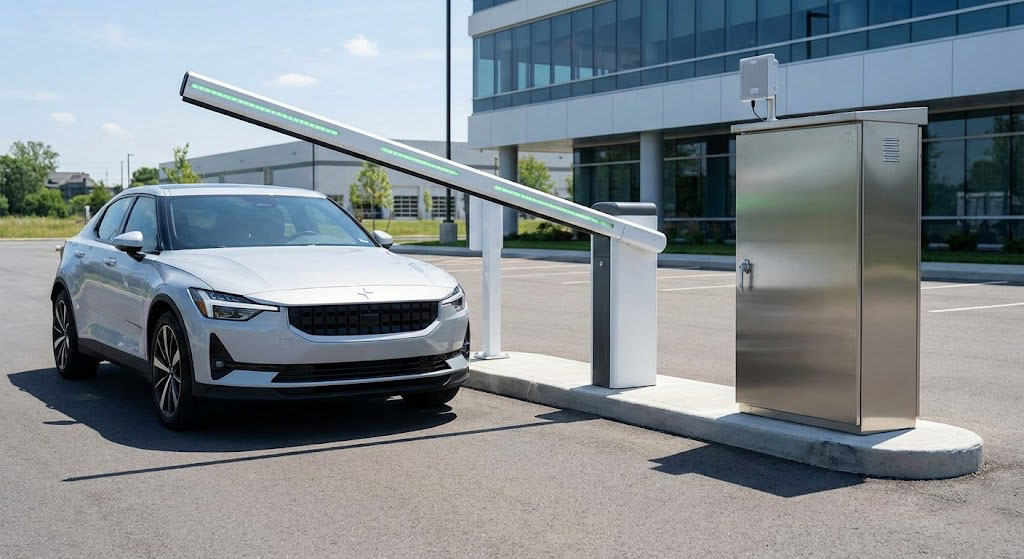
Hành trình của tôi trong lĩnh vực này bắt đầu khi các hệ thống đỗ xe, có thể nói, là một ít tinh tế hơn. Một bộ dò vòng, một cánh cửa rào, một máy phát vé, và một cabin thanh toán chỉ nhận tiền mặt. Quản lý là thủ công, dữ liệu là giai thoại, và khả năng mở rộng là một cơn ác mộng. Mở rộng ra một bãi đỗ mới có nghĩa là đào rãnh,铺设 dặm cáp, và thường nhân bản toàn bộ hệ thống điều khiển. Khắc phục sự cố các địa điểm từ xa? Hãy chuẩn bị hành lý và đồng hồ vạn năng của bạn; bạn sẽ đi một chuyến công tác.
Sự xuất hiện của các hệ thống mạng mang lại một số sự giảm bớt, cho phép giám sát và điều khiển tập trung. Nhưng ngay cả những hệ thống này cũng phụ thuộc nhiều vào các kết nối dây đắt tiền, dễ bị tổn thương. Nếu một máy đào cắt sợi quang của bạn thì sao? Nếu một tòa nhà mới cản liên kết không dây tầm nhìn của bạn thì sao? Những điểm yếu là dồi dào, và chi phí để phục hồi là rất cao.
Đây là nơi IoT bước vào, không chỉ như một nâng cấp, mà như một sự thay đổi về mặt. Hãy tưởng tượng mỗi cổng đỗ xe, mỗi máy thanh toán, mỗi cảm biến chiếm chỗ, không phải là một điểm cuối bị cô lập, mà là một nút thông minh trên một mạng lưới rộng lớn, kiên cường và vốn linh hoạt. Đây là lời hứa của IoT, và với các thành phần phù hợp, đó là lời hứa chúng ta có thể thực hiện hôm nay.
Tại sao 4G là anh hùng thầm lặng cho các hệ thống bãi đỗ xe phân tán
Trước khi đi sâu vào chi tiết của module ngôi sao của chúng ta, hãy nói về tại sao kết nối di động, đặc biệt là 4G LTE, lại là một lựa chọn tự nhiên cho kiểm soát truy cập bãi đỗ xe. Hình dung một thành phố với hàng chục bãi đỗ xe, hoặc một khuôn viên trường đại học với nhiều điểm vào được trải rộng trên nhiều dặm. Lắp đặt sợi quang đến từng địa điểm này là một công việc khổng lồ, không kể đến cơn đau đầu về bảo trì. Wi-Fi có thể bao phủ các khu vực nhỏ, nhưng phạm vi và độ tin cậy của nó trong môi trường ngoài trời, năng động thường thiếu đối với các ứng dụng quan trọng về mặt nhiệm vụ.
Tuy nhiên, di động được thiết kế chính xác cho loại phạm vi phân tán, diện rộng này. Đó là cơ sở hạ tầng đã có, được duy trì bởi các nhà cung cấp dịch vụ và được xây dựng cho độ tin cậy và phạm vi tiếp cận. Đối với một hệ thống bãi đỗ xe, điều này có nghĩa là:
- Rapid Deployment: Không cần đào rãnh, không cần cáp đắt tiền. Chỉ cần nguồn điện và một tín hiệu di động tốt.
- Khả năng mở rộng: Thêm một khu vực đỗ xe mới cũng đơn giản như lắp đặt thiết bị IoT và kết nối nó với mạng.
- Quản lý từ xa: Từ một phòng điều khiển trung tâm, bạn có thể giám sát trạng thái, cập nhật phần mềm, thay đổi giá vé và khắc phục sự cố, bất kể khoảng cách vật lý.
- Dữ liệu thời gian thực: Nhận số lượng chiếm chỗ tức thì, dữ liệu giao dịch, thông báo báo động và luồng video từ camera ANPR.
- Cost-Effectiveness: Mặc dù có chi phí dữ liệu liên tục, những chi phí này thường bị lu mờ bởi chi phí vốn và tiết kiệm bảo trì so với các lựa chọn có dây.
Giống như có một đường cao tốc dữ liệu chuyên dụng, tốc độ cao kết nối từng mảnh ghép bãi đỗ xe của bạn, mà không cần bạn tự xây dựng đường cao tốc đó. Rất hấp dẫn, phải không?
Module ZX4224 4G: Người đưa tin đáng tin cậy của dữ liệu của bạn
Bây giờ, hãy đến với trung tâm của câu chuyện của chúng ta: module ZX4224 4G. Khi chúng ta nói về IoT công nghiệp, từ “công nghiệp” không chỉ là một từ khóa tiếp thị; đó là lời hứa về sự kiên cường, độ tin cậy và tuổi thọ trong những môi trường khiến điện tử tiêu dùng phải khóc. ZX4224 thể hiện lời hứa này.
Think of the ZX4224 as the unsung hero, the highly specialized courier responsible for securely and reliably transporting your critical parking data between the edge devices (barrier controllers, ANPR cameras, payment kiosks) and your central management platform or cloud. It’s not just a modem; it’s a hardened, intelligent communication hub.
Here’s why it’s such a perfect fit for parking access control:
- Độ bền cấp công nghiệp: Parking environments are harsh. Temperature swings, dust, humidity, vibrations – the ZX4224 is built to withstand them. It operates across a wide temperature range (typically -40°C đến +85°C), ensuring continuous operation whether it’s baking in a summer sun or freezing in a winter storm. This isn’t your smartphone’s delicate modem; it’s a ruggedized component designed for always-on, outdoor deployment.
- Robust 4G LTE Connectivity: Offering high-speed data transmission (often Cat 4 LTE for 150 Mbps downlink, 50 Mbps uplink), the ZX4224 ensures that ANPR camera feeds, real-time transaction data, and system commands are delivered swiftly and efficiently. It also typically supports various LTE bands, ensuring broad compatibility across different cellular networks globally.
- Enhanced Security Features: This is paramount. Parking systems handle sensitive data – payment information, vehicle license plates, entry/exit logs. The ZX4224 often includes features like integrated VPN support (IPsec, OpenVPN, L2TP), secure boot, and data encryption capabilities. This means your data isn’t just traveling fast; it’s traveling securely, encased in a digital fortress.
- Remote Management and Diagnostics: Imagine diagnosing a barrier controller issue from your office, hundreds of miles away. The ZX4224 enables this. Its ability to facilitate remote access, configuration, and even over-the-air (OTA) firmware updates for connected devices significantly reduces maintenance costs and downtime. It’s like having a technician on-site, virtually.
- Low Power Consumption: For remote parking lots, especially those powered by solar or limited grid connections, power efficiency is crucial. The ZX4224 is engineered to be energy-efficient, extending battery life and reducing operational costs.
- Compact Form Factor: Despite its robust capabilities, the ZX4224 is designed for easy integration into existing or new parking equipment. Its small footprint allows it to be embedded directly into barrier controllers, payment kiosks, or dedicated communication enclosures without requiring extensive modifications.
- Reliable Failover: Some versions of such modules can be configured with dual SIM slots or offer fallback to 3G/2G, providing an additional layer of reliability should a primary network connection falter. This is critical for preventing parking system downtime.
In essence, the ZX4224 isn’t just connecting devices; it’s enabling a new level of operational intelligence and resilience for parking infrastructure.
Anatomy of an IoT-Enabled Parking System with ZX4224
Let’s visualize how this all fits together. Imagine a typical entry/exit point in a modern parking facility:
- The Edge Devices: This is where the action happens. You have your barrier arm, an Automatic Number Plate Recognition (ANPR) camera, an intercom, perhaps a ticket dispenser/reader, and inductive loops in the ground. You might also have a nearby payment kiosk.
- The Local Controller: This unit acts as the brain for the immediate area, interpreting signals from the ANPR camera, loop detectors, and ticket readers, and sending commands to the barrier arm.
- The ZX4224 Module: This is where our hero steps in. The ZX4224 is either embedded directly into the local controller or housed in a compact, rugged enclosure alongside it. Its job is to collect all the critical data from these edge devices – ANPR reads, entry/exit timestamps, payment transactions, system status, fault codes – and securely transmit it over the 4G cellular network. It also receives commands from the central management platform, such as opening a barrier remotely, updating parking rates, or running diagnostics.
- The Cellular Network: The invisible highway. Your chosen carrier’s 4G LTE network provides the robust, wide-area connectivity.
- The Cloud Platform / Central Management System: This is the nerve center. It’s a powerful server infrastructure (often cloud-based) that receives all the data from hundreds or thousands of ZX4224-equipped parking nodes. Here, data is aggregated, analyzed, and presented to operators. This platform allows for:
- Real-time occupancy monitoring across all sites.
- Centralized tariff management and dynamic pricing.
- Remote barrier control and override.
- Detailed reporting and analytics (peak usage, revenue, dwell times).
- Integration with third-party applications (mobile payment apps, corporate HR systems for employee parking).
- Proactive maintenance alerts and diagnostics.
The beauty of this architecture is its distributed intelligence coupled with centralized control. Each parking node can operate autonomously to a degree, but it’s always connected, always reporting, and always ready to receive new instructions. It’s like having a network of highly trained, independent agents, all reporting back to a central command center.
Real-World Scenario: Revitalizing a University Campus Parking System
Let me tell you about a project where the ZX4224 truly shone. A large, sprawling university campus was grappling with an outdated parking system. They had multiple entry/exit points, some quite remote from the central administration building, and a mix of legacy equipment. Their challenges were significant:
- High Infrastructure Costs: Maintaining miles of buried fiber optic cable was expensive and prone to damage.
- Poor Visibility: Campus security had no real-time data on parking occupancy, leading to frustrating searches for students and faculty, especially during peak hours.
- Manual Processes: Guest parking required physical passes, and event parking was a logistical nightmare.
- Limited Scalability: Adding new parking areas or expanding existing ones was a massive civil engineering project.
- Slow Troubleshooting: Diagnosing issues at remote gates meant sending technicians across campus, wasting time and resources.
The university decided it was time for a complete overhaul, embracing an IoT-first approach. We proposed a solution centered around the ZX4224 modules.
The Solution in Action:
- Modular Gate Controllers: At each entry and exit point, we installed new, intelligent gate controllers. Crucially, each controller was equipped with an embedded ZX4224 4G module.
- ANPR Integration: High-resolution ANPR cameras were paired with the controllers. When a vehicle approached, its license plate was read, and the data was sent via the ZX4224 to a cloud-based parking management platform.
- Frictionless Access: For registered students and faculty, their license plates served as their credentials. The system would automatically verify, and if authorized, the barrier would lift. For visitors, an integrated QR code scanner (also connected via the ZX4224) allowed for pre-booked parking or on-the-spot mobile payments.
- Real-Time Occupancy: Inductive loops and ultrasonic sensors (communicating through the ZX4224-enabled controllers) provided accurate, real-time occupancy data for every lot. This data was fed to a central dashboard and also displayed on digital signage around campus, guiding drivers to available spaces.
- Remote Management & Diagnostics: The central parking office could now monitor every gate, every transaction, and every sensor in real-time. If a barrier arm got stuck, an alert was immediately generated. Technicians could remotely access the controller via the ZX4224’s secure connection to diagnose issues, restart processes, or even unlock a gate without physically being there.
- Event Management: For large campus events, temporary parking rules, tariffs, and access lists could be pushed to all relevant gates simultaneously from the central platform.
The Transformative Results:
- Significant Cost Savings: The elimination of extensive trenching and cabling alone saved the university millions in infrastructure costs. Ongoing maintenance was dramatically reduced.
- Trải nghiệm người dùng được nâng cao: Students, faculty, and visitors found parking much easier and less stressful, thanks to real-time guidance and frictionless entry.
- Improved Security: All vehicle movements were logged and time-stamped, providing a robust audit trail. Unauthorized access attempts were immediately flagged.
- Hiệu quả Vận hành: Parking staff could manage the entire campus from a single interface, reallocating resources from manual oversight to proactive management.
- Scalability for the Future: As the university expanded, adding new parking areas became a matter of installing new intelligent controllers with ZX4224 modules, not a civil engineering project.
This case vividly demonstrated that the ZX4224 wasn’t just a component; it was an enabler, transforming a historically manual, fragmented system into a cohesive, intelligent, and future-proof parking ecosystem. It’s a testament to the power of industrial IoT when deployed with the right components and a clear vision.
Navigating the Path: Challenges and Considerations
While the benefits are clear, no industrial deployment is without its considerations. Here’s what you need to keep in mind when integrating modules like the ZX4224:
- Cellular Coverage: This is fundamental. Conduct thorough site surveys to ensure robust 4G LTE coverage at every deployment point. Don’t assume; verify. Consider external antennas for optimal signal strength.
- Data Plan Management: Each module will require a data plan. While parking data isn’t typically huge, streaming ANPR video or frequent updates can add up. Choose appropriate plans and monitor data usage.
- Cybersecurity Strategy: A cellular connection is a doorway. Implement end-to-end encryption, strong authentication, VPNs (which the ZX4224 supports), and robust firewalls. Regular security audits are non-negotiable.
- Power Redundancy: Even though the ZX4224 is low-power, ensure the entire parking access control system has reliable power, perhaps with battery backups or solar power for critical remote locations.
- Integration Complexity: While the ZX4224 handles the communication, integrating it with diverse parking equipment (ANPR cameras, barrier controllers, payment systems) still requires careful planning and API development. Standardized protocols like MQTT can greatly simplify this.
- Firmware Management: Plan for remote firmware updates for the ZX4224 and connected devices. This ensures long-term security and feature enhancements.
These aren’t roadblocks, but rather essential steps in designing a resilient and secure industrial IoT solution. With a thoughtful approach, they are entirely manageable.
The Future is Connected, and It’s Parking Smart
As we look ahead, the integration of IoT in parking access control will only deepen. We’ll see more sophisticated AI at the edge, processing ANPR data locally to reduce bandwidth. We’ll leverage 5G for even lower latency and higher bandwidth applications, potentially enabling real-time augmented reality for parking guidance. Predictive analytics will optimize space allocation and maintenance schedules. The humble parking lot will transform into a truly smart, dynamic hub within the smart city ecosystem.
And at the core of this transformation will be reliable, industrial-grade components like the ZX4224 4G module, providing the secure, robust, and ubiquitous connectivity that makes it all possible. It’s an exciting time to be in industrial networking, isn’t it?
So, the next time you effortlessly glide into a parking garage, take a moment to appreciate the silent, tireless work of these connected devices. Chances are, a little industrial IoT hero like the ZX4224 is working hard behind the scenes, making your journey just a little bit smoother.
Những câu hỏi thường gặp
What makes the ZX4224 “industrial-grade” compared to a consumer 4G modem?
The “industrial-grade” designation for the ZX4224 signifies several key differences. Firstly, it’s designed to operate reliably in extreme environmental conditions, such as wide temperature ranges (e.g., -40°C to +85°C), high humidity, dust, and vibration, which consumer devices cannot withstand. Secondly, it features enhanced electromagnetic compatibility (EMC) to prevent interference in industrial settings. Thirdly, it often incorporates advanced security features like secure boot, hardware-based encryption, and robust VPN support, crucial for mission-critical applications. Finally, industrial modules are built for long-term deployment, offering extended product lifecycles and stable firmware support.
How secure is cellular IoT for parking systems with modules like the ZX4224?
When properly implemented, cellular IoT with modules like the ZX4224 can be highly secure. The ZX4224 typically supports multiple VPN protocols (IPsec, OpenVPN) to create encrypted tunnels for data transmission, protecting against eavesdropping. Data at rest on the module can be encrypted, and secure boot ensures the integrity of the firmware. Furthermore, robust access controls, firewalls, and regular security updates on both the module and the central cloud platform are essential. While no system is 100% impenetrable, combining the ZX4224’s built-in security features with a comprehensive cybersecurity strategy provides a very strong defense against threats.
Can I use Wi-Fi instead of 4G for parking access control?
While Wi-Fi can be used for very localized parking systems, 4G offers significant advantages for distributed or outdoor parking access control. Wi-Fi has a limited range, is prone to interference in outdoor environments, and requires extensive infrastructure (access points, cabling) to cover large areas or multiple remote sites. 4G, conversely, leverages existing carrier networks, providing wide-area coverage, superior penetration, and inherent mobility. For systems spread across a large campus or city, 4G with modules like the ZX4224 dramatically simplifies deployment, reduces infrastructure costs, and enhances reliability, especially for critical real-time data transmission like ANPR feeds.
What happens if the 4G signal is lost at a parking gate equipped with a ZX4224?
In the event of a 4G signal loss, a well-designed IoT parking system will incorporate local intelligence and redundancy. The local gate controller, even without a network connection, should be able to operate autonomously for basic functions, such as reading pre-authorized credentials (e.g., locally stored license plates or RFID tags) and controlling the barrier. Transaction data or event logs would typically be stored locally on the controller and then uploaded to the central system once the 4G connection is restored. Some advanced ZX4224 implementations might also support automatic fallback to 3G/2G networks or dual SIMs for carrier redundancy, further minimizing downtime.
Is the ZX4224 compatible with existing parking equipment?
The ZX4224 itself is a communication module, not a full parking controller. Its compatibility depends on how it’s integrated. It’s typically embedded into new industrial gate controllers or communication gateways that are designed to interface with existing parking equipment like barrier arms, ANPR cameras, loop detectors, and ticket machines via standard industrial protocols (e.g., Modbus, Ethernet, RS-485, digital I/O). Therefore, while the ZX4224 facilitates the cellular communication, the overall IoT solution needs to be engineered to integrate with your specific legacy or new equipment, often requiring a modern “smart” controller that can host the ZX4224 and bridge to older hardware.

 Whatsapp+8613603031172


