
¡Saludos, arquitectos del mundo industrial conectado! Como alguien que ha pasado más de unos pocos años luchando con cables, coaccionando datos a través de vastas distancias e intentando hacer que sistemas dispuestos canten en armonía, he presenciado de primera mano la transformación de nuestros paisajes operativos. Hoy, quiero revelar una fascinante aplicación, a menudo pasada por alto, donde el silencioso e incansable trabajo del IoT industrial está marcando una diferencia tangible: el control de acceso a estacionamientos. Y en el corazón de esta historia en particular se encuentra un robusto y pequeño trabajador, el módulo 4G ZX4224.
Piense en el estacionamiento por un momento. Para la mayoría de nosotros, es una parte mundana, a veces frustrante, de nuestras vidas diarias. Pero para quienes administran grandes instalaciones, ya sea un corporativo extenso, un aeropuerto bullicioso, un estacionamiento urbano de varios niveles o incluso un sitio industrial remoto, el control de acceso a estacionamientos es un centro nervioso crítico. Se trata de seguridad, eficiencia, ingresos y experiencia del usuario. Tradicionalmente, estos sistemas estaban atados por cobre y fibra, limitados por la infraestructura física y a menudo eran un dolor de cabeza para administrar de forma remota. Pero ¿y si pudiéramos cortar esos cables, literalmente?
Ingrese al mundo del IoT. No estamos hablando solo de bombillas inteligentes aquí; estamos hablando de inteligencia de grado industrial, llevando el poder de los datos en tiempo real y el comando remoto hasta el mismo borde de su red, incluso donde la infraestructura tradicional teme aventurarse. Y en el contexto del estacionamiento, esto no es solo un buen a tener; es un cambio de juego.
La Evolución del Estacionamiento: Desde Barreras Tontas hasta Pasarelas Inteligentes
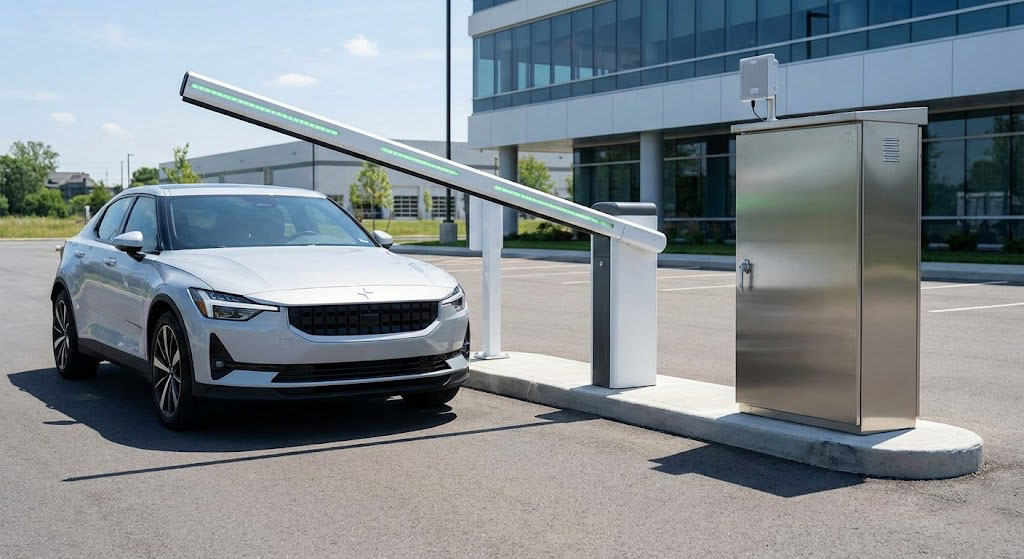
Mi viaje en este espacio comenzó cuando los sistemas de estacionamiento, digamos, eran un poco menos sofisticados. Un detector de bucle, un brazo de barrera, un dispensador de boletos y una cabina de pago solo en efectivo. La administración era manual, los datos eran anecdóticos y la escalabilidad era una pesadilla. Expandirse a un nuevo lote significaba zanjas, kilómetros de cableado y a menudo replicar sistemas de control completos. ¿Solucionar problemas en sitios remotos? Empaque sus maletas y su multímetro; estaba haciendo un viaje de campo.
La llegada de los sistemas en red trajo algún alivio, permitiendo monitoreo y control centralizados. Pero incluso estos dependían en gran medida de costosas y vulnerables conexiones cableadas. ¿Y si una retroexcavadora cortara su fibra? ¿Y si un nuevo edificio obstruyera su enlace inalámbrico de línea de visión? Las vulnerabilidades eran abundantes y el costo de la resiliencia era alto.
Aquí es donde el IoT entra, no solo como una actualización, sino como un cambio de paradigma. Imagine cada portón de estacionamiento, cada quiosco de pago, cada sensor de ocupación, no como un punto final aislado, sino como un nodo inteligente en una vasta red resiliente e inherentemente flexible. Esta es la promesa del IoT, y con los componentes adecuados, es una promesa que podemos cumplir hoy.
Por qué 4G es el Héroe No Cantado para los Sistemas de Estacionamiento Distribuidos
Antes de sumergirnos en los detalles de nuestro módulo estrella, hablemos de por qué la conectividad celular, en particular 4G LTE, es un ajuste tan natural para el control de acceso a estacionamientos. Imagine una ciudad con docenas de estacionamientos, o un campus universitario con múltiples puntos de entrada extendidos a través de millas. Tender fibra a cada una de estas ubicaciones es una empresa astronómica, sin mencionar el dolor de cabeza del mantenimiento. El Wi-Fi podría cubrir pequeñas áreas, pero su alcance y fiabilidad en un entorno al aire libre y dinámico a menudo son deficientes para aplicaciones críticas de misión.
Sin embargo, la celular está diseñada exactamente para este tipo de cobertura distribuida y de amplia área. Es una infraestructura que ya existe, mantenida por los operadores y construida para la fiabilidad y el alcance. Para un sistema de estacionamiento, esto significa:
- Despliegue Rápido: Sin zanjas, sin cableado costoso. Solo energía y una buena señal celular.
- Escalabilidad: Agregar un nuevo área de estacionamiento es tan simple como instalar el habilitado para IoT y conectarlo a la red.
- Administración Remota: Desde una sala de control central, puede monitorear el estado, actualizar el firmware, cambiar las tarifas y solucionar problemas, independientemente de la distancia física.
- Datos en Tiempo Real: Obtenga conteos de ocupación instantáneos, datos de transacciones, notificaciones de alarma y transmisiones de video desde cámaras de reconocimiento de matrículas (ANPR).
- Cost-Effectiveness: Si bien hay costos de datos en curso, estos a menudo son superados por los ahorros de capital y mantenimiento en comparación con las alternativas cableadas.
Es como tener una autopista de datos dedicada y de alta velocidad conectando cada pieza de su rompecabezas de estacionamiento, sin tener que construir la autoparta usted mismo. ¿ bastante convincente, verdad?
El Módulo 4G ZX4224: Su Fiable Mensajero de Datos
Ahora, lleguemos al corazón de nuestra historia: el módulo 4G ZX4224. Cuando hablamos de IoT industrial, la palabra “industrial” no es solo un término de marketing; es una promesa de resiliencia, fiabilidad y longevidad en entornos que harían llorar a los electrónicos de consumo. El ZX4224 encarna esta promesa.
Think of the ZX4224 as the unsung hero, the highly specialized courier responsible for securely and reliably transporting your critical parking data between the edge devices (barrier controllers, ANPR cameras, payment kiosks) and your central management platform or cloud. It’s not just a modem; it’s a hardened, intelligent communication hub.
Here’s why it’s such a perfect fit for parking access control:
- Industrial-Grade Durability: Parking environments are harsh. Temperature swings, dust, humidity, vibrations – the ZX4224 is built to withstand them. It operates across a wide temperature range (typically -40°C a +85°C), ensuring continuous operation whether it’s baking in a summer sun or freezing in a winter storm. This isn’t your smartphone’s delicate modem; it’s a ruggedized component designed for always-on, outdoor deployment.
- Robust 4G LTE Connectivity: Offering high-speed data transmission (often Cat 4 LTE for 150 Mbps downlink, 50 Mbps uplink), the ZX4224 ensures that ANPR camera feeds, real-time transaction data, and system commands are delivered swiftly and efficiently. It also typically supports various LTE bands, ensuring broad compatibility across different cellular networks globally.
- Enhanced Security Features: This is paramount. Parking systems handle sensitive data – payment information, vehicle license plates, entry/exit logs. The ZX4224 often includes features like integrated VPN support (IPsec, OpenVPN, L2TP), secure boot, and data encryption capabilities. This means your data isn’t just traveling fast; it’s traveling securely, encased in a digital fortress.
- Gestión remota y diagnóstico: Imagine diagnosing a barrier controller issue from your office, hundreds of miles away. The ZX4224 enables this. Its ability to facilitate remote access, configuration, and even over-the-air (OTA) firmware updates for connected devices significantly reduces maintenance costs and downtime. It’s like having a technician on-site, virtually.
- Low Power Consumption: For remote parking lots, especially those powered by solar or limited grid connections, power efficiency is crucial. The ZX4224 is engineered to be energy-efficient, extending battery life and reducing operational costs.
- Compact Form Factor: Despite its robust capabilities, the ZX4224 is designed for easy integration into existing or new parking equipment. Its small footprint allows it to be embedded directly into barrier controllers, payment kiosks, or dedicated communication enclosures without requiring extensive modifications.
- Reliable Failover: Some versions of such modules can be configured with dual SIM slots or offer fallback to 3G/2G, providing an additional layer of reliability should a primary network connection falter. This is critical for preventing parking system downtime.
In essence, the ZX4224 isn’t just connecting devices; it’s enabling a new level of operational intelligence and resilience for parking infrastructure.
Anatomy of an IoT-Enabled Parking System with ZX4224
Let’s visualize how this all fits together. Imagine a typical entry/exit point in a modern parking facility:
- The Edge Devices: This is where the action happens. You have your barrier arm, an Automatic Number Plate Recognition (ANPR) camera, an intercom, perhaps a ticket dispenser/reader, and inductive loops in the ground. You might also have a nearby payment kiosk.
- The Local Controller: This unit acts as the brain for the immediate area, interpreting signals from the ANPR camera, loop detectors, and ticket readers, and sending commands to the barrier arm.
- The ZX4224 Module: This is where our hero steps in. The ZX4224 is either embedded directly into the local controller or housed in a compact, rugged enclosure alongside it. Its job is to collect all the critical data from these edge devices – ANPR reads, entry/exit timestamps, payment transactions, system status, fault codes – and securely transmit it over the 4G cellular network. It also receives commands from the central management platform, such as opening a barrier remotely, updating parking rates, or running diagnostics.
- The Cellular Network: The invisible highway. Your chosen carrier’s 4G LTE network provides the robust, wide-area connectivity.
- The Cloud Platform / Central Management System: This is the nerve center. It’s a powerful server infrastructure (often cloud-based) that receives all the data from hundreds or thousands of ZX4224-equipped parking nodes. Here, data is aggregated, analyzed, and presented to operators. This platform allows for:
- Real-time occupancy monitoring across all sites.
- Centralized tariff management and dynamic pricing.
- Remote barrier control and override.
- Detailed reporting and analytics (peak usage, revenue, dwell times).
- Integration with third-party applications (mobile payment apps, corporate HR systems for employee parking).
- Proactive maintenance alerts and diagnostics.
The beauty of this architecture is its distributed intelligence coupled with centralized control. Each parking node can operate autonomously to a degree, but it’s always connected, always reporting, and always ready to receive new instructions. It’s like having a network of highly trained, independent agents, all reporting back to a central command center.
Real-World Scenario: Revitalizing a University Campus Parking System
Let me tell you about a project where the ZX4224 truly shone. A large, sprawling university campus was grappling with an outdated parking system. They had multiple entry/exit points, some quite remote from the central administration building, and a mix of legacy equipment. Their challenges were significant:
- High Infrastructure Costs: Maintaining miles of buried fiber optic cable was expensive and prone to damage.
- Poor Visibility: Campus security had no real-time data on parking occupancy, leading to frustrating searches for students and faculty, especially during peak hours.
- Manual Processes: Guest parking required physical passes, and event parking was a logistical nightmare.
- Limited Scalability: Adding new parking areas or expanding existing ones was a massive civil engineering project.
- Slow Troubleshooting: Diagnosing issues at remote gates meant sending technicians across campus, wasting time and resources.
The university decided it was time for a complete overhaul, embracing an IoT-first approach. We proposed a solution centered around the ZX4224 modules.
The Solution in Action:
- Modular Gate Controllers: At each entry and exit point, we installed new, intelligent gate controllers. Crucially, each controller was equipped with an embedded 1. Módulo 4G ZX4224.
- ANPR Integration: High-resolution ANPR cameras were paired with the controllers. When a vehicle approached, its license plate was read, and the data was sent via the ZX4224 to a cloud-based parking management platform.
- Frictionless Access: For registered students and faculty, their license plates served as their credentials. The system would automatically verify, and if authorized, the barrier would lift. For visitors, an integrated QR code scanner (also connected via the ZX4224) allowed for pre-booked parking or on-the-spot mobile payments.
- Real-Time Occupancy: Inductive loops and ultrasonic sensors (communicating through the ZX4224-enabled controllers) provided accurate, real-time occupancy data for every lot. This data was fed to a central dashboard and also displayed on digital signage around campus, guiding drivers to available spaces.
- Remote Management & Diagnostics: The central parking office could now monitor every gate, every transaction, and every sensor in real-time. If a barrier arm got stuck, an alert was immediately generated. Technicians could remotely access the controller via the ZX4224’s secure connection to diagnose issues, restart processes, or even unlock a gate without physically being there.
- Event Management: For large campus events, temporary parking rules, tariffs, and access lists could be pushed to all relevant gates simultaneously from the central platform.
The Transformative Results:
- Significant Cost Savings: The elimination of extensive trenching and cabling alone saved the university millions in infrastructure costs. Ongoing maintenance was dramatically reduced.
- Experiencia de usuario mejorada: Students, faculty, and visitors found parking much easier and less stressful, thanks to real-time guidance and frictionless entry.
- Improved Security: All vehicle movements were logged and time-stamped, providing a robust audit trail. Unauthorized access attempts were immediately flagged.
- Eficiencia Operativa: Parking staff could manage the entire campus from a single interface, reallocating resources from manual oversight to proactive management.
- Scalability for the Future: As the university expanded, adding new parking areas became a matter of installing new intelligent controllers with ZX4224 modules, not a civil engineering project.
This case vividly demonstrated that the ZX4224 wasn’t just a component; it was an enabler, transforming a historically manual, fragmented system into a cohesive, intelligent, and future-proof parking ecosystem. It’s a testament to the power of industrial IoT when deployed with the right components and a clear vision.
Navigating the Path: Challenges and Considerations
While the benefits are clear, no industrial deployment is without its considerations. Here’s what you need to keep in mind when integrating modules like the ZX4224:
- Cellular Coverage: This is fundamental. Conduct thorough site surveys to ensure robust 4G LTE coverage at every deployment point. Don’t assume; verify. Consider external antennas for optimal signal strength.
- Data Plan Management: Each module will require a data plan. While parking data isn’t typically huge, streaming ANPR video or frequent updates can add up. Choose appropriate plans and monitor data usage.
- Cybersecurity Strategy: A cellular connection is a doorway. Implement end-to-end encryption, strong authentication, VPNs (which the ZX4224 supports), and robust firewalls. Regular security audits are non-negotiable.
- Redundancia de energía: Even though the ZX4224 is low-power, ensure the entire parking access control system has reliable power, perhaps with battery backups or solar power for critical remote locations.
- Integration Complexity: While the ZX4224 handles the communication, integrating it with diverse parking equipment (ANPR cameras, barrier controllers, payment systems) still requires careful planning and API development. Standardized protocols like MQTT can greatly simplify this.
- Firmware Management: Plan for remote firmware updates for the ZX4224 and connected devices. This ensures long-term security and feature enhancements.
These aren’t roadblocks, but rather essential steps in designing a resilient and secure industrial IoT solution. With a thoughtful approach, they are entirely manageable.
The Future is Connected, and It’s Parking Smart
As we look ahead, the integration of IoT in parking access control will only deepen. We’ll see more sophisticated AI at the edge, processing ANPR data locally to reduce bandwidth. We’ll leverage 5G for even lower latency and higher bandwidth applications, potentially enabling real-time augmented reality for parking guidance. Predictive analytics will optimize space allocation and maintenance schedules. The humble parking lot will transform into a truly smart, dynamic hub within the smart city ecosystem.
And at the core of this transformation will be reliable, industrial-grade components like the ZX4224 4G module, providing the secure, robust, and ubiquitous connectivity that makes it all possible. It’s an exciting time to be in industrial networking, isn’t it?
So, the next time you effortlessly glide into a parking garage, take a moment to appreciate the silent, tireless work of these connected devices. Chances are, a little industrial IoT hero like the ZX4224 is working hard behind the scenes, making your journey just a little bit smoother.
Preguntas frecuentes
What makes the ZX4224 “industrial-grade” compared to a consumer 4G modem?
The “industrial-grade” designation for the ZX4224 signifies several key differences. Firstly, it’s designed to operate reliably in extreme environmental conditions, such as wide temperature ranges (e.g., -40°C to +85°C), high humidity, dust, and vibration, which consumer devices cannot withstand. Secondly, it features enhanced electromagnetic compatibility (EMC) to prevent interference in industrial settings. Thirdly, it often incorporates advanced security features like secure boot, hardware-based encryption, and robust VPN support, crucial for mission-critical applications. Finally, industrial modules are built for long-term deployment, offering extended product lifecycles and stable firmware support.
How secure is cellular IoT for parking systems with modules like the ZX4224?
When properly implemented, cellular IoT with modules like the ZX4224 can be highly secure. The ZX4224 typically supports multiple VPN protocols (IPsec, OpenVPN) to create encrypted tunnels for data transmission, protecting against eavesdropping. Data at rest on the module can be encrypted, and secure boot ensures the integrity of the firmware. Furthermore, robust access controls, firewalls, and regular security updates on both the module and the central cloud platform are essential. While no system is 100% impenetrable, combining the ZX4224’s built-in security features with a comprehensive cybersecurity strategy provides a very strong defense against threats.
Can I use Wi-Fi instead of 4G for parking access control?
While Wi-Fi can be used for very localized parking systems, 4G offers significant advantages for distributed or outdoor parking access control. Wi-Fi has a limited range, is prone to interference in outdoor environments, and requires extensive infrastructure (access points, cabling) to cover large areas or multiple remote sites. 4G, conversely, leverages existing carrier networks, providing wide-area coverage, superior penetration, and inherent mobility. For systems spread across a large campus or city, 4G with modules like the ZX4224 dramatically simplifies deployment, reduces infrastructure costs, and enhances reliability, especially for critical real-time data transmission like ANPR feeds.
What happens if the 4G signal is lost at a parking gate equipped with a ZX4224?
In the event of a 4G signal loss, a well-designed IoT parking system will incorporate local intelligence and redundancy. The local gate controller, even without a network connection, should be able to operate autonomously for basic functions, such as reading pre-authorized credentials (e.g., locally stored license plates or RFID tags) and controlling the barrier. Transaction data or event logs would typically be stored locally on the controller and then uploaded to the central system once the 4G connection is restored. Some advanced ZX4224 implementations might also support automatic fallback to 3G/2G networks or dual SIMs for carrier redundancy, further minimizing downtime.
Is the ZX4224 compatible with existing parking equipment?
The ZX4224 itself is a communication module, not a full parking controller. Its compatibility depends on how it’s integrated. It’s typically embedded into new industrial gate controllers or communication gateways that are designed to interface with existing parking equipment like barrier arms, ANPR cameras, loop detectors, and ticket machines via standard industrial protocols (e.g., Modbus, Ethernet, RS-485, digital I/O). Therefore, while the ZX4224 facilitates the cellular communication, the overall IoT solution needs to be engineered to integrate with your specific legacy or new equipment, often requiring a modern “smart” controller that can host the ZX4224 and bridge to older hardware.

 Whatsapp+8613603031172


