
Grüße, Mitarchitekten der vernetzten industriellen Welt! Als jemand, der schon mehr als ein paar Jahre mit Kabeln gerungen, Daten über weite Strecken gezwungen und versucht hat, disparate Systeme in Harmonie singen zu lassen, habe ich aus erster Hand die Transformation unserer Betriebslandschaften miterlebt. Heute möchte ich den Vorhang für ein faszinierendes, oft übersehenes Anwendungsfeld zurückziehen, wo die stille, unermüdliche Arbeit des industriellen IoT einen greifbaren Unterschied macht: den Zugangskontroll für Parkplätze. Und im Herzen dieser besonderen Geschichte steht ein robuster kleiner Arbeitstier, das ZX4224 4G-Modul.
Denken Sie einen Moment über Parkplätze nach. Für die meisten von uns ist es eine alltägliche, manchmal frustrierende Teil unseres täglichen Lebens. Aber für diejenigen, die große Einrichtungen verwalten – sei es ein ausgedehnter Firmencampus, ein belebter Flughafen, ein mehrstöckiges Stadtgarage oder sogar ein entfernter Industriestandort – ist der Zugangskontroll für Parkplätze ein kritischer Nervenzentrum. Es geht um Sicherheit, Effizienz, Umsatz und Nutzererlebnis. Traditionell waren diese Systeme durch Kupfer und Glasfaser verbunden, durch physische Infrastruktur begrenzt und oft ein Albtraum zur Fernverwaltung. Aber was, wenn wir diese Kabel buchstäblich durchtrennen könnten?
Betreten Sie das Reich des IoT. Wir sprechen hier nicht nur über intelligente Glühbirnen; wir sprechen über industriegradige Intelligenz, die die Kraft von Echtzeitdaten und Fernbefehlen direkt an den Rand Ihres Netzwerks bringt, selbst dorthin, wo traditionelle Infrastruktur zögert. Und im Kontext von Parkplätzen ist das nicht nur ein Nice-to-have; es ist ein Game-Changer.
Die Evolution des Parkens: Von dummen Schranken zu intelligenten Gateways
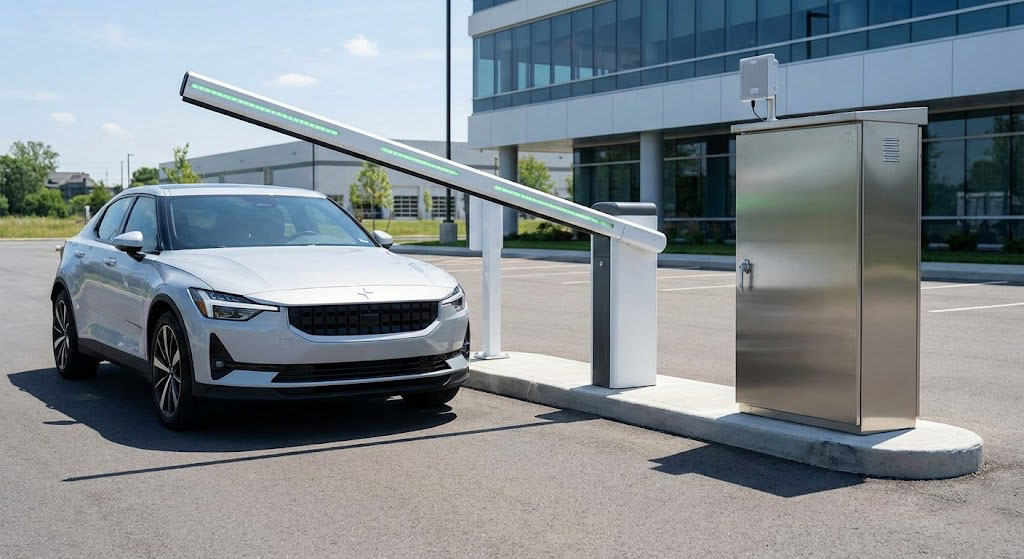
Meine Reise in diesem Raum begann, als Parksysteme, sagen wir mal, ein wenig weniger fortschrittlich waren. Eine Schleifendetektor, eine Schrankenarm, ein Ticketautomat und eine nur barzahlende Kasse. Die Verwaltung war manuell, die Daten waren anekdotisch und die Skalierbarkeit war ein Albtraum. Die Erweiterung auf eine neue Fläche bedeutete das Graben von Gräben, das Verlegen von Meilen von Kabeln und oft die Replikation ganzer Kontrollsysteme. Fehlerbehebung an entfernten Standorten? Packen Sie Ihre Koffer und Ihren Multimeter; Sie machten eine Exkursion.
Die Einführung vernetzter Systeme brachte etwas Erleichterung, ermöglichte zentrale Überwachung und Steuerung. Aber auch diese Systeme waren stark von kostspieligen, anfälligen Kabelverbindungen abhängig. Was, wenn ein Bagger Ihr Glasfaserkabel durchtrennt? Was, wenn ein neues Gebäude Ihre Sichtverbindung drahtlos blockiert? Die Schwachstellen waren zahlreich und die Kosten für Resilienz waren hoch.
Hier kommt IoT ins Spiel, nicht nur als Upgrade, sondern als Paradigmenwechsel. Stellen Sie sich vor, jede Parkschranke, jeder Zahlautomat, jeder Belegungssensor nicht als isolierter Endpunkt, sondern als intelligenter Knoten in einem riesigen, resilienten und inhärent flexiblen Netzwerk vor. Das ist das Versprechen des IoT, und mit den richtigen Komponenten können wir dieses Versprechen heute erfüllen.
Warum 4G der unsung Hero für verteilte Parksysteme ist
Bevor wir in die Details unseres Star-Moduls eintauchen, sprechen wir darüber, warum die cellular Verbindung, insbesondere 4G LTE, so natürlich für den Zugangskontroll für Parkplätze passt. Stellen Sie sich eine Stadt mit Dutzenden von Parkhäusern oder einen Universitätscampus mit mehreren Eingängen vor, die über Meilen verteilt sind. Das Verlegen von Glasfaser zu jedem dieser Standorte ist ein astronomisches Unterfangen, nicht zu erwähnen ein Wartungsalbtraum. Wi-Fi könnte kleine Bereiche abdecken, aber Reichweite und Zuverlässigkeit in einer Außen-, dynamischen Umgebung fehlen oft für missionskritische Anwendungen.
Cellular ist jedoch genau für diese Art von verteilter, großflächiger Abdeckung konzipiert. Es ist eine Infrastruktur, die bereits vorhanden ist, von Trägern gewartet und für Zuverlässigkeit und Reichweite gebaut. Für ein Parksystem bedeutet das:
- Rapid Deployment: Keine Gräben, keine teuren Kabel. Nur Strom und ein gutes cellular Signal.
- Skalierbarkeit: Das Hinzufügen eines neuen Parkbereichs ist so einfach wie die Installation der IoT-fähigen Ausrüstung und die Verbindung mit dem Netzwerk.
- Fernverwaltung: Von einer zentralen Kontrollraum aus können Sie Status überwachen, Firmware aktualisieren, Tarife ändern und Probleme beheben, unabhängig von der physischen Entfernung.
- Echtzeitdaten: Erhalten Sie sofortige Belegungszählungen, Transaktionsdaten, Alarmbenachrichtigungen und Videofeeds von ANPR-Kameras.
- Kosteneffektivität: Während es laufende Datenkosten gibt, werden diese oft von den Kapitalausgaben und Wartungseinsparungen im Vergleich zu kabelgebundenen Alternativen in den Schatten gestellt.
Es ist, als hätten Sie eine dedizierte, hochgeschwindige Datenautobahn, die jedes einzelne Stück Ihres Parkpuzzles verbindet, ohne dass Sie die Autobahn selbst bauen müssten. Ziemlich überzeugend, oder?
Das ZX4224 4G-Modul: Ihr zuverlässiger Kurier für Daten
Now, let’s get to the heart of our story: the ZX4224 4G module. When we talk about industrial IoT, the word “industrial” isn’t just a marketing buzzword; it’s a promise of resilience, reliability, and longevity in environments that would make consumer-grade electronics weep. The ZX4224 embodies this promise.
Think of the ZX4224 as the unsung hero, the highly specialized courier responsible for securely and reliably transporting your critical parking data between the edge devices (barrier controllers, ANPR cameras, payment kiosks) and your central management platform or cloud. It’s not just a modem; it’s a hardened, intelligent communication hub.
Here’s why it’s such a perfect fit for parking access control:
- Industrietaugliche Haltbarkeit: Parking environments are harsh. Temperature swings, dust, humidity, vibrations – the ZX4224 is built to withstand them. It operates across a wide temperature range (typically -40°C bis +85°C), ensuring continuous operation whether it’s baking in a summer sun or freezing in a winter storm. This isn’t your smartphone’s delicate modem; it’s a ruggedized component designed for always-on, outdoor deployment.
- Robust 4G LTE Connectivity: Offering high-speed data transmission (often Cat 4 LTE for 150 Mbps downlink, 50 Mbps uplink), the ZX4224 ensures that ANPR camera feeds, real-time transaction data, and system commands are delivered swiftly and efficiently. It also typically supports various LTE bands, ensuring broad compatibility across different cellular networks globally.
- Enhanced Security Features: This is paramount. Parking systems handle sensitive data – payment information, vehicle license plates, entry/exit logs. The ZX4224 often includes features like integrated VPN support (IPsec, OpenVPN, L2TP), secure boot, and data encryption capabilities. This means your data isn’t just traveling fast; it’s traveling securely, encased in a digital fortress.
- Fernverwaltung und Diagnostik: Imagine diagnosing a barrier controller issue from your office, hundreds of miles away. The ZX4224 enables this. Its ability to facilitate remote access, configuration, and even over-the-air (OTA) firmware updates for connected devices significantly reduces maintenance costs and downtime. It’s like having a technician on-site, virtually.
- Low Power Consumption: For remote parking lots, especially those powered by solar or limited grid connections, power efficiency is crucial. The ZX4224 is engineered to be energy-efficient, extending battery life and reducing operational costs.
- Compact Form Factor: Despite its robust capabilities, the ZX4224 is designed for easy integration into existing or new parking equipment. Its small footprint allows it to be embedded directly into barrier controllers, payment kiosks, or dedicated communication enclosures without requiring extensive modifications.
- Reliable Failover: Some versions of such modules can be configured with dual SIM slots or offer fallback to 3G/2G, providing an additional layer of reliability should a primary network connection falter. This is critical for preventing parking system downtime.
In essence, the ZX4224 isn’t just connecting devices; it’s enabling a new level of operational intelligence and resilience for parking infrastructure.
Anatomy of an IoT-Enabled Parking System with ZX4224
Let’s visualize how this all fits together. Imagine a typical entry/exit point in a modern parking facility:
- The Edge Devices: This is where the action happens. You have your barrier arm, an Automatic Number Plate Recognition (ANPR) camera, an intercom, perhaps a ticket dispenser/reader, and inductive loops in the ground. You might also have a nearby payment kiosk.
- The Local Controller: This unit acts as the brain for the immediate area, interpreting signals from the ANPR camera, loop detectors, and ticket readers, and sending commands to the barrier arm.
- The ZX4224 Module: This is where our hero steps in. The ZX4224 is either embedded directly into the local controller or housed in a compact, rugged enclosure alongside it. Its job is to collect all the critical data from these edge devices – ANPR reads, entry/exit timestamps, payment transactions, system status, fault codes – and securely transmit it over the 4G cellular network. It also receives commands from the central management platform, such as opening a barrier remotely, updating parking rates, or running diagnostics.
- The Cellular Network: The invisible highway. Your chosen carrier’s 4G LTE network provides the robust, wide-area connectivity.
- The Cloud Platform / Central Management System: This is the nerve center. It’s a powerful server infrastructure (often cloud-based) that receives all the data from hundreds or thousands of ZX4224-equipped parking nodes. Here, data is aggregated, analyzed, and presented to operators. This platform allows for:
- Real-time occupancy monitoring across all sites.
- Centralized tariff management and dynamic pricing.
- Remote barrier control and override.
- Detailed reporting and analytics (peak usage, revenue, dwell times).
- Integration with third-party applications (mobile payment apps, corporate HR systems for employee parking).
- Proactive maintenance alerts and diagnostics.
The beauty of this architecture is its distributed intelligence coupled with centralized control. Each parking node can operate autonomously to a degree, but it’s always connected, always reporting, and always ready to receive new instructions. It’s like having a network of highly trained, independent agents, all reporting back to a central command center.
Real-World Scenario: Revitalizing a University Campus Parking System
Let me tell you about a project where the ZX4224 truly shone. A large, sprawling university campus was grappling with an outdated parking system. They had multiple entry/exit points, some quite remote from the central administration building, and a mix of legacy equipment. Their challenges were significant:
- High Infrastructure Costs: Maintaining miles of buried fiber optic cable was expensive and prone to damage.
- Poor Visibility: Campus security had no real-time data on parking occupancy, leading to frustrating searches for students and faculty, especially during peak hours.
- Manual Processes: Guest parking required physical passes, and event parking was a logistical nightmare.
- Limited Scalability: Adding new parking areas or expanding existing ones was a massive civil engineering project.
- Slow Troubleshooting: Diagnosing issues at remote gates meant sending technicians across campus, wasting time and resources.
The university decided it was time for a complete overhaul, embracing an IoT-first approach. We proposed a solution centered around the ZX4224 modules.
The Solution in Action:
- Modular Gate Controllers: At each entry and exit point, we installed new, intelligent gate controllers. Crucially, each controller was equipped with an embedded ZX4224 4G Modul.
- ANPR Integration: High-resolution ANPR cameras were paired with the controllers. When a vehicle approached, its license plate was read, and the data was sent via the ZX4224 to a cloud-based parking management platform.
- Frictionless Access: For registered students and faculty, their license plates served as their credentials. The system would automatically verify, and if authorized, the barrier would lift. For visitors, an integrated QR code scanner (also connected via the ZX4224) allowed for pre-booked parking or on-the-spot mobile payments.
- Real-Time Occupancy: Inductive loops and ultrasonic sensors (communicating through the ZX4224-enabled controllers) provided accurate, real-time occupancy data for every lot. This data was fed to a central dashboard and also displayed on digital signage around campus, guiding drivers to available spaces.
- Remote-Management & Diagnostik: The central parking office could now monitor every gate, every transaction, and every sensor in real-time. If a barrier arm got stuck, an alert was immediately generated. Technicians could remotely access the controller via the ZX4224’s secure connection to diagnose issues, restart processes, or even unlock a gate without physically being there.
- Event Management: For large campus events, temporary parking rules, tariffs, and access lists could be pushed to all relevant gates simultaneously from the central platform.
The Transformative Results:
- Significant Cost Savings: The elimination of extensive trenching and cabling alone saved the university millions in infrastructure costs. Ongoing maintenance was dramatically reduced.
- Verbesserte Benutzererfahrung: Students, faculty, and visitors found parking much easier and less stressful, thanks to real-time guidance and frictionless entry.
- Improved Security: All vehicle movements were logged and time-stamped, providing a robust audit trail. Unauthorized access attempts were immediately flagged.
- Operational Efficiency: Parking staff could manage the entire campus from a single interface, reallocating resources from manual oversight to proactive management.
- Scalability for the Future: As the university expanded, adding new parking areas became a matter of installing new intelligent controllers with ZX4224 modules, not a civil engineering project.
This case vividly demonstrated that the ZX4224 wasn’t just a component; it was an enabler, transforming a historically manual, fragmented system into a cohesive, intelligent, and future-proof parking ecosystem. It’s a testament to the power of industrial IoT when deployed with the right components and a clear vision.
Navigating the Path: Challenges and Considerations
While the benefits are clear, no industrial deployment is without its considerations. Here’s what you need to keep in mind when integrating modules like the ZX4224:
- Cellular Coverage: This is fundamental. Conduct thorough site surveys to ensure robust 4G LTE coverage at every deployment point. Don’t assume; verify. Consider external antennas for optimal signal strength.
- Data Plan Management: Each module will require a data plan. While parking data isn’t typically huge, streaming ANPR video or frequent updates can add up. Choose appropriate plans and monitor data usage.
- Cybersecurity Strategy: A cellular connection is a doorway. Implement end-to-end encryption, strong authentication, VPNs (which the ZX4224 supports), and robust firewalls. Regular security audits are non-negotiable.
- Power Redundancy: Even though the ZX4224 is low-power, ensure the entire parking access control system has reliable power, perhaps with battery backups or solar power for critical remote locations.
- Integration Complexity: While the ZX4224 handles the communication, integrating it with diverse parking equipment (ANPR cameras, barrier controllers, payment systems) still requires careful planning and API development. Standardized protocols like MQTT can greatly simplify this.
- Firmware Management: Plan for remote firmware updates for the ZX4224 and connected devices. This ensures long-term security and feature enhancements.
These aren’t roadblocks, but rather essential steps in designing a resilient and secure industrial IoT solution. With a thoughtful approach, they are entirely manageable.
The Future is Connected, and It’s Parking Smart
As we look ahead, the integration of IoT in parking access control will only deepen. We’ll see more sophisticated AI at the edge, processing ANPR data locally to reduce bandwidth. We’ll leverage 5G for even lower latency and higher bandwidth applications, potentially enabling real-time augmented reality for parking guidance. Predictive analytics will optimize space allocation and maintenance schedules. The humble parking lot will transform into a truly smart, dynamic hub within the smart city ecosystem.
And at the core of this transformation will be reliable, industrial-grade components like the ZX4224 4G module, providing the secure, robust, and ubiquitous connectivity that makes it all possible. It’s an exciting time to be in industrial networking, isn’t it?
So, the next time you effortlessly glide into a parking garage, take a moment to appreciate the silent, tireless work of these connected devices. Chances are, a little industrial IoT hero like the ZX4224 is working hard behind the scenes, making your journey just a little bit smoother.
Häufig gestellte Fragen
What makes the ZX4224 “industrial-grade” compared to a consumer 4G modem?
The “industrial-grade” designation for the ZX4224 signifies several key differences. Firstly, it’s designed to operate reliably in extreme environmental conditions, such as wide temperature ranges (e.g., -40°C to +85°C), high humidity, dust, and vibration, which consumer devices cannot withstand. Secondly, it features enhanced electromagnetic compatibility (EMC) to prevent interference in industrial settings. Thirdly, it often incorporates advanced security features like secure boot, hardware-based encryption, and robust VPN support, crucial for mission-critical applications. Finally, industrial modules are built for long-term deployment, offering extended product lifecycles and stable firmware support.
How secure is cellular IoT for parking systems with modules like the ZX4224?
When properly implemented, cellular IoT with modules like the ZX4224 can be highly secure. The ZX4224 typically supports multiple VPN protocols (IPsec, OpenVPN) to create encrypted tunnels for data transmission, protecting against eavesdropping. Data at rest on the module can be encrypted, and secure boot ensures the integrity of the firmware. Furthermore, robust access controls, firewalls, and regular security updates on both the module and the central cloud platform are essential. While no system is 100% impenetrable, combining the ZX4224’s built-in security features with a comprehensive cybersecurity strategy provides a very strong defense against threats.
Can I use Wi-Fi instead of 4G for parking access control?
While Wi-Fi can be used for very localized parking systems, 4G offers significant advantages for distributed or outdoor parking access control. Wi-Fi has a limited range, is prone to interference in outdoor environments, and requires extensive infrastructure (access points, cabling) to cover large areas or multiple remote sites. 4G, conversely, leverages existing carrier networks, providing wide-area coverage, superior penetration, and inherent mobility. For systems spread across a large campus or city, 4G with modules like the ZX4224 dramatically simplifies deployment, reduces infrastructure costs, and enhances reliability, especially for critical real-time data transmission like ANPR feeds.
What happens if the 4G signal is lost at a parking gate equipped with a ZX4224?
In the event of a 4G signal loss, a well-designed IoT parking system will incorporate local intelligence and redundancy. The local gate controller, even without a network connection, should be able to operate autonomously for basic functions, such as reading pre-authorized credentials (e.g., locally stored license plates or RFID tags) and controlling the barrier. Transaction data or event logs would typically be stored locally on the controller and then uploaded to the central system once the 4G connection is restored. Some advanced ZX4224 implementations might also support automatic fallback to 3G/2G networks or dual SIMs for carrier redundancy, further minimizing downtime.
Is the ZX4224 compatible with existing parking equipment?
The ZX4224 itself is a communication module, not a full parking controller. Its compatibility depends on how it’s integrated. It’s typically embedded into new industrial gate controllers or communication gateways that are designed to interface with existing parking equipment like barrier arms, ANPR cameras, loop detectors, and ticket machines via standard industrial protocols (e.g., Modbus, Ethernet, RS-485, digital I/O). Therefore, while the ZX4224 facilitates the cellular communication, the overall IoT solution needs to be engineered to integrate with your specific legacy or new equipment, often requiring a modern “smart” controller that can host the ZX4224 and bridge to older hardware.

 Whatsapp+8613603031172


